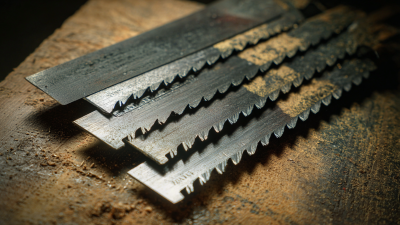
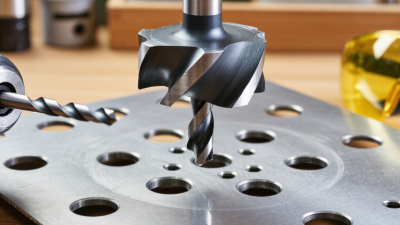
Top 10 Types of Jigsaw Blades for Every Cutting Job?

A jigsaw can follow a curve, trim a worktop, or cut a narrow notch beside a cabinet wall. The blade determines how cleanly it does the job. Tooth shape, length, width, and material all affect the cut. Choose poorly, and the blade may wander, splinter the surface, or heat up before the cut is finished.

This guide compares ten common types of Jigsaw Blades, from fine-tooth options for metal to coarse blades for fast timber cuts. It explains where each type works best, which materials it suits, and what trade-offs to expect. A blade marked for wood may still behave differently in plywood, laminate, or hardwood. Test on an offcut when the finish matters. Small details count.

The supplied material does not identify a named blade expert or provide a verifiable quotation, so I won’t invent either. A reliable guide should distinguish sourced advice from general workshop practice. One practical rule is simple: match the blade to the material, then consider the finish and cutting speed. Not the label alone. Check the shank type against your saw, secure the workpiece, and let the blade cut without forcing it. Even then, a little tear-out can happen. That part deserves attention, not denial.
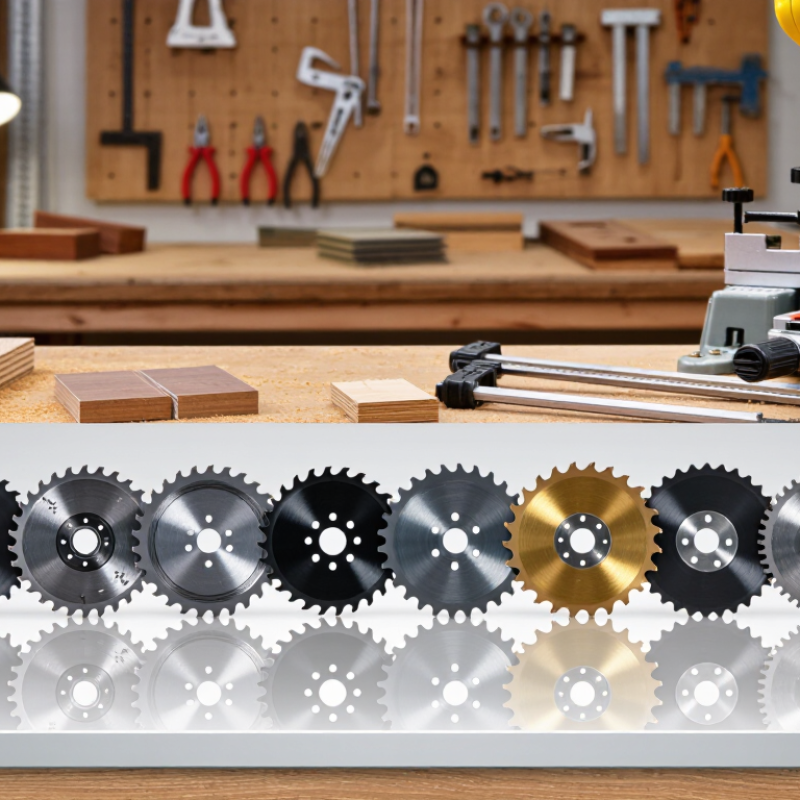
Top 10 Types of Jigsaw Blades for Every Cutting Job?

Jigsaw Blade Anatomy and the Features That Shape Each Cut

A jigsaw blade is more than a strip of steel with teeth. Its shank locks into the tool, while the blade body guides the cut. Blade width affects steering: narrow blades turn more readily, but can wander on straight lines. Tooth pitch, usually described as teeth per inch, shapes chip size and finish. Small teeth, cleaner edges. Coarse teeth remove material quickly, though they can leave a rougher edge. Keep several teeth engaged with the workpiece; a pitch too coarse for thin stock may catch and chatter.

Set, rake, and tooth material also matter. Set bends teeth outward to create clearance, while kerf is the width of material removed. A narrow kerf wastes less stock, but the blade may flex under side pressure. For wood, moisture is part of the equation. The USDA Forest Products Laboratory’s Wood Handbook, FPL-GTR-282 (2021), places wood’s fiber-saturation point near 30% moisture content; below it, changing moisture can shift dimensions. The handbook also reports greater tangential than radial shrinkage in wood. Fast, but rough. In practice, a damp board and a fine-pitch blade can still produce a ragged exit edge. I’d test on scrap, because blade geometry alone cannot predict grain behavior.

Top 10 Jigsaw Blade Types: Typical Teeth per Inch (TPI)

TPI is a practical guide to cut character: lower TPI generally cuts faster and more roughly, while higher TPI tends to make smoother cuts in thinner or harder materials. Values shown are representative midpoints of common ranges; actual blade specifications vary by design and material thickness.

Wood-Cutting Blades: HCS, Reverse-Tooth, Down-Cut, and Scrolling

For general wood cuts, high-carbon-steel (HCS) blades suit softwood, plywood, and other relatively forgiving stock. Their flexibility is useful, but it can also let a long blade wander in thick material. Use a sharp blade, moderate feed pressure, and a steady grip. Wood moisture matters. The USDA Forest Products Laboratory’s 2021 Wood Handbook places the fiber-saturation point near 30% moisture content, with variation by species. Below that point, drying affects wood dimensions; a damp board and a dry board may not cut alike.

To reduce splintering on the visible top face, choose a reverse-tooth blade: its teeth cut on the downstroke. “Down-cut” often describes the same tooth direction, so the labels can overlap rather than indicate two distinct blade families. Keep the shoe flat. These blades can push the tool upward, so maintain control and avoid forcing the cut. For curves, a narrow scrolling blade turns more readily than a wide blade, but tight turns still need slow, patient feeding. I have found that speed is tempting here; it often leaves a rough edge or bends the cut line. Match the blade to the wood, the curve, and the face you want clean.

Metal and Mixed-Material Blades: HSS, Bi-Metal, and Carbide-Tipped

HSS jigsaw blades suit thin, relatively soft metals such as aluminum sheet. Their teeth cut cleanly when the workpiece is clamped firmly and the saw moves at a controlled pace. Use a fine-tooth blade for thin sheet to reduce snagging and rough edges. Keep the shoe flat against the surface. It helps steady the cut. HSS teeth can wear quickly in harder metals, so a blade that starts smoothly may soon leave a ragged edge. I still test on an offcut when the metal’s thickness or condition is uncertain.

Bi-metal blades combine a flexible steel body with harder cutting teeth. They are a practical choice for repeated cuts in steel, pipes, and mixed materials, where a blade may meet changing resistance. For example, cutting through a thin metal panel with a plastic layer calls for steady pressure, not extra force. Carbide-tipped blades offer greater wear resistance for abrasive materials, including some fiber-cement products and layered panels. They are often more expensive, and they may cut more slowly than expected. Match the blade to the material, thickness, and tooth spacing; check the package guidance before use. If the cut wanders, pause and inspect the blade rather than pushing harder. A dull blade can heat the workpiece and spoil the edge.

Specialty Blades: Carbide-Grit, Diamond-Grit, and Flush-Cut

Carbide-grit and diamond-grit blades use abrasive edges rather than conventional teeth. Carbide grit suits cement board, fiberglass, and some plaster products; diamond grit is a stronger choice for ceramic tile and other hard, brittle materials. Move slowly and let the abrasive edge do the work. Dust rises quickly. The U.S. Geological Survey’s Mineral Commodity Summaries 2024 estimated global synthetic industrial-diamond production at about 16 billion carats in 2023. That figure describes material supply, not blade quality or cutting speed.

Grit size, blade width, and workpiece support all affect the cut. A narrow blade can follow a curve, but it may wander if pushed too hard. Keep the material steady, use eye protection, and follow the tool maker’s dust-control guidance. For tile, test an offcut first; chipped edges are difficult to hide. I would not assume a diamond edge always lasts longer in every material.

Flush-cut blades address a different problem: reaching close to a wall, floor, or fitted trim. Check that the blade’s shape clears the tool and the surface before cutting. A small gap can still remain. Make a shallow trial cut, inspect the line, then adjust the angle or depth. Even careful setup cannot guarantee a perfectly flush finish on an uneven surface.

Top 10 Types of Jigsaw Blades for Every Cutting Job? - Specialty Blades: Carbide-Grit, Diamond-Grit, and Flush-Cut

Blade type Edge or tooth design Typical materials and jobs Cut characteristics Selection notes
1. Coarse-tooth wood blade Usually high-carbon steel (HCS), with widely spaced teeth, often around 6–10 TPI. Fast cuts in softwood, construction lumber, and thicker wood panels. Cuts quickly but leaves a rougher edge; coarse teeth help clear chips in thicker stock. Choose a blade with sufficient usable length for the workpiece thickness. Support the material to reduce vibration and splintering.
2. Fine-tooth wood blade HCS blade with closer-set teeth, commonly about 10–20 TPI. Plywood, hardwood, laminates, and detail work where a cleaner edge is preferred. Produces a smoother cut than a coarse blade, generally at a slower feed rate. Use a sharp blade and steady feed; cutting too quickly can increase chipping, especially in veneered panels.
3. Reverse-tooth blade Wood-cutting teeth point in the opposite direction near the blade’s working edge, depending on blade design. Veneered plywood, finished panels, and work where top-surface tear-out is a concern. Can reduce splintering on the face contacted by the cutting teeth; cutting action may differ from a standard blade. Some reverse-tooth blades require the workpiece or tool setup to be adjusted. Check the blade instructions and secure the work firmly.
4. High-speed-steel (HSS) metal blade Hardened steel teeth, often with a fine pitch such as approximately 18–24 TPI. Thin sheet metal, aluminum, and some non-ferrous metal profiles when the blade is rated for the material. Fine teeth help limit snagging on thinner material; cutting is typically slower than with a wood blade. Keep several teeth engaged in the material where possible. Use appropriate clamping and follow the tool and blade guidance for speed and lubrication.
5. Bi-metal blade Typically combines a flexible steel body with a hardened cutting edge; tooth pitch varies by model. Metal cutting and mixed workshop use where greater blade durability is useful. Combines a more flexible body with a wear-resistant tooth edge; performance depends on the specific tooth pattern and material rating. Match the tooth pitch and blade rating to the metal thickness. A bi-metal construction does not make every blade suitable for every metal.
6. Narrow scroll-cut blade Narrow blade body, often with fine teeth, designed to turn more readily than a wide blade. Tight curves, small-radius cuts, and intricate patterns in suitable wood or sheet materials. Improves maneuverability for curved paths, but may cut more slowly and can deflect if forced. Turn the saw gradually and let the blade follow the curve; forcing a tight turn can bend or break a narrow blade.
7. Progressive-pitch blade Tooth spacing changes along the blade; some designs are marked with a pitch range such as 10/14 TPI. Materials or thicknesses that benefit from a versatile tooth pitch, such as certain plastics, wood, or metal when specified. A changing pitch can help balance cutting speed and chip clearance across a range of conditions. Check the blade’s stated material and thickness range; progressive pitch alone does not determine suitability.
8. Carbide-grit blade Abrasive carbide grit along the cutting edge rather than conventional saw teeth. Abrasive or cement-based sheet materials such as cement board, fiber cement, and some masonry products, when the blade is rated for them. Abrades through the material and can be useful where toothed blades wear rapidly; cutting is generally slower and creates fine dust. Use dust extraction and suitable respiratory protection. Confirm compatibility with the specific material and follow its safety guidance.
9. Diamond-grit blade Diamond abrasive bonded to the cutting edge; it does not use conventional tooth pitch. Certain ceramic tile, glass, or stone materials, only when the blade and saw are specified for the job. Grinds rather than saws, allowing cuts in some hard, brittle materials; the edge may require careful handling to limit chipping. Follow the blade’s instructions for speed, cooling, and dust control. Do not assume it is suitable for tempered glass or every type of tile or stone.
10. Flush-cut blade A specialized low-profile or offset geometry; the exact shape varies by blade design. Trimming protruding material close to an adjacent surface, such as a projecting edge or fitting, when the setup allows. Provides access near a surface that a standard blade may not reach cleanly; cut direction and clearance depend on the design. Check blade compatibility, shoe clearance, and the intended cutting orientation before use. Protect the nearby finished surface.

Choosing a Blade by Material, Cut Quality, and Tool Compatibility

A jigsaw blade works best when its teeth match the material, not just the tool. High-carbon steel blades suit softer wood and occasional cuts, while bi-metal blades tolerate harder use and last longer. For tile or abrasive composites, carbide-grit blades cut without conventional teeth. Check the blade’s stated material range before starting; similar-looking blades can behave very differently.

To control cut quality, match tooth size and direction to the finish you need. Coarse teeth remove wood quickly but may leave a ragged edge. Fine-tooth blades produce cleaner cuts in thin sheet metal or laminate, though they move more slowly. Reverse-tooth blades help reduce chipping on the visible top face. Down-cut blades can also protect a finished surface. That matters. For curves, narrow scroll blades turn more easily, but they can wander if pushed too hard.

Compatibility is easy to overlook. Compare the blade shank with your saw’s clamp, then check blade length and cutting capacity. T-shank and U-shank fittings are common, but not universal. I sometimes overvalue a clean-looking package description; the manufacturer’s tool manual is more dependable. Test on scrap first. A blade that cuts smoothly in plywood may burn hardwood, and even the right blade can drift when feed pressure is uneven. Brush away dust and watch the cut line, especially near the end of a narrow curve.