China’s dental manufacturing sector supplies a broad range of Dental Implant Screwdrivers for clinics, laboratories, and implant system distributors. These tools may appear simple, yet small design differences can affect handling, torque control, and implant connection safety.
This guide examines leading Chinese manufacturers and the qualities that deserve careful review. Important details include stainless steel grade, driver tip accuracy, handle balance, surface finishing, and compatibility with specific implant systems. A reliable supplier should provide dimensional drawings, material information, inspection records, and clear sterilization guidance. Production systems aligned with ISO 13485 can indicate stronger quality management, although certification should always be verified directly.
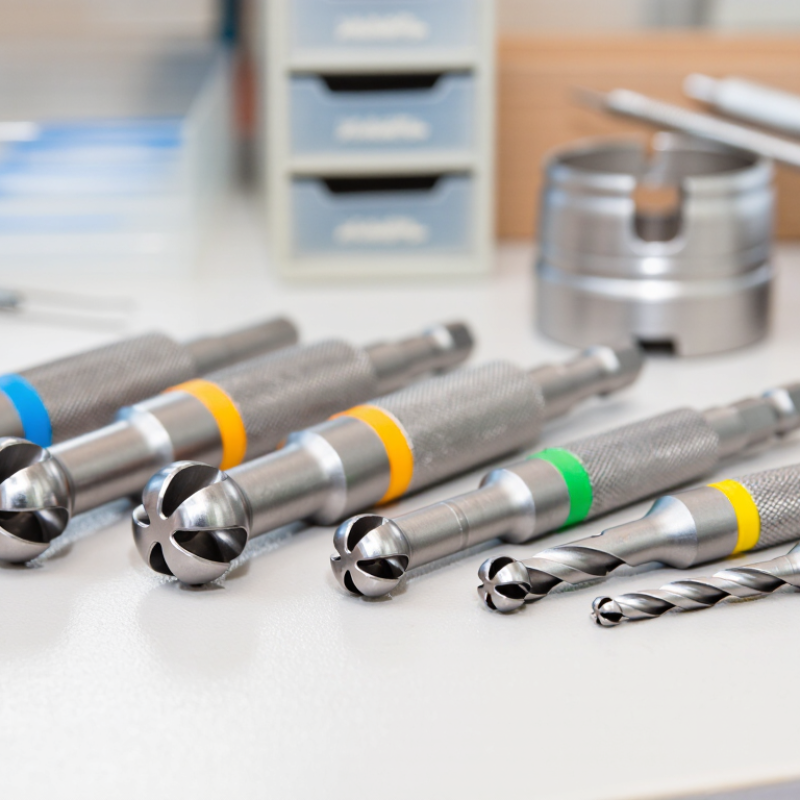
Clinical experience also matters. A driver that feels secure during a procedure can reduce slipping near the patient’s mouth. Knurled handles may improve grip with gloved hands. Color coding can help teams identify different sizes quickly. These practical details are easy to overlook.
Samples tell a more useful story than polished catalogs. Check the driver’s fit, rotation smoothness, laser markings, and resistance after repeated sterilization cycles. Ask how suppliers control batch consistency and manage custom requests. Not every factory offers the same engineering depth.
Some evaluations remain imperfect.
Price alone cannot prove value. Supplier reputation cannot replace testing. A thoughtful comparison should combine technical evidence, user feedback, production capability, and after-sales communication. With this balanced approach, buyers can identify Chinese manufacturers that provide dependable Dental Implant Screwdrivers for professional dental applications.
Dental Implant Screwdrivers: Purpose, Design, and Clinical Applications
Dental implant screwdrivers transfer controlled force during implant placement and prosthetic procedures. They help clinicians tighten cover screws, abutments, healing components, and prosthetic screws with greater consistency. A suitable driver must match the implant connection precisely. Even slight mismatch can damage internal surfaces or reduce torque accuracy.
Design details affect clinical performance. Common features include hexagonal, star-shaped, or manufacturer-specific tips, along with short and extended shafts. Some models include color coding or depth markings for faster identification. A torque wrench connection supports measured tightening, while a textured handle improves grip with gloved hands. The instrument should also tolerate repeated cleaning and sterilization without losing dimensional stability.
Clinical applications vary from routine restorations to narrow posterior access. Long drivers can reach deep or angled sites, but they may flex under pressure. Short drivers often provide better control in open access areas. This trade-off deserves attention. A comfortable handle does not guarantee accurate torque. Clinicians should verify compatibility, inspect the tip for wear, and follow the implant system’s torque instructions. Manufacturers in China and other production centers should provide material information, dimensional data, sterilization guidance, and quality documentation. These details support safer purchasing and clinical verification. In practice, small fitting errors can create major complications.
China Top Dental Implant Screwdrivers Manufacturers
China’s dental instrument manufacturing landscape is shifting from volume production toward controlled precision. This change is clear in implant screwdrivers, where tip geometry, torque transfer, and sterilization stability matter. Fortune Business Insights valued the global dental implants market at approximately USD 5.6 billion in 2022. That demand raises expectations for every connected instrument.
Chinese manufacturers increasingly combine CNC machining, heat treatment, surface finishing, and final inspection. Practical supplier reviews should examine alloy certificates, dimensional tolerances, calibrated torque testing, and cleaning validation. ISO 13485 certification provides useful evidence, but certification alone cannot prove consistent performance. Buyers should also request sampling plans, batch records, and laser-marking checks. Small details matter. A driver that slips inside a narrow implant connection can damage the interface or delay treatment.
China benefits from dense supplier networks and expanding engineering capacity. International Trade Centre data identifies China as a major exporter of dental instruments, although the classification covers several product categories. That limitation deserves attention. Broad trade figures cannot confirm implant-driver quality. The World Health Organization’s Global Oral Health Status Report estimates that nearly 3.5 billion people live with oral diseases, supporting sustained demand for reliable dental care. Yet price pressure remains intense. It may encourage thinner documentation. Manufacturers should publish clearer torque ranges, cycle-test results, and sterilization instructions. The sector is advancing, but independent verification still seems insufficient.
| Data Dimension | Industry Data | Manufacturing Relevance | Buyer Verification Points |
|---|---|---|---|
| Primary Function | Dental implant screwdrivers are used to engage, place, tighten, or remove implant components and prosthetic screws. | Production requires accurate driver geometry, controlled concentricity, and secure engagement with the corresponding screw interface. | Confirm the intended clinical application, compatible connection geometry, and whether the tool is intended for manual or torque-controlled use. |
| Common Driver Interfaces | Hexagonal, star-shaped, square, and other proprietary or system-specific interfaces are used in implant dentistry. | Each interface requires dedicated tooling, dimensional inspection, and compatibility control; visually similar profiles may not be interchangeable. | Request engineering drawings, interface tolerances, sample-fit records, and compatibility statements for the target implant system. |
| Typical Materials | Corrosion-resistant stainless steels are widely used for reusable dental instruments; titanium and engineering polymers may be used for selected components. | Material selection affects hardness, wear resistance, corrosion performance, sterilization durability, and magnetic behavior. | Check the material grade, heat-treatment records where applicable, corrosion testing, and material certificates. |
| Manufacturing Processes | Common processes include CNC turning, milling, grinding, broaching, polishing, passivation, laser marking, cleaning, and final inspection. | Small driver tips and internal profiles often require precision machining and dedicated gauges to maintain repeatability. | Evaluate process flow charts, in-process inspection plans, gauge calibration, surface-finish controls, and traceability procedures. |
| Torque Compatibility | The required torque depends on the implant connection, screw design, clinical protocol, and manufacturer’s instructions; there is no universal torque value. | The driver must withstand the specified torque without tip deformation, slippage, or permanent damage. | Ask for maximum recommended torque, torsional-strength test methods, cycle testing, and instructions for use. |
| Dimensional Control | Critical dimensions include tip profile, shaft diameter, working length, overall length, shank geometry, and retention features. | Tight control of the working end helps reduce screw damage, stripping, wobble, and incomplete engagement. | Review inspection reports using calibrated optical comparators, coordinate measuring equipment, gauges, or equivalent methods. |
| Surface Treatment | Polishing, passivation, electropolishing, and selected coatings may be used to improve cleanability, corrosion resistance, or identification. | Surface condition influences particle retention, cleaning effectiveness, corrosion behavior, and patient-contact safety. | Request surface-finish specifications, treatment parameters, corrosion-test results, and evidence that coatings do not interfere with fit. |
| Sterilization Compatibility | Reusable metal instruments are commonly designed for cleaning and steam sterilization when validated according to the applicable instructions. | Repeated exposure to heat, moisture, chemicals, and mechanical cleaning can affect finish, markings, and dimensional stability. | Verify validated reprocessing instructions, maximum reuse guidance, cleaning limitations, and packaging requirements. |
| Quality Management | Medical-device production is commonly managed through documented quality systems, including design control, purchasing control, process validation, and corrective action procedures. | A controlled quality system supports consistent dimensions, batch traceability, complaint handling, and change management. | Confirm current certification to ISO 13485 or an equivalent applicable quality-management requirement and verify certificate scope. |
| Regulatory Documentation | Documentation may include technical drawings, risk analysis, material declarations, test reports, labeling, instructions for use, and batch records. | Complete documentation helps support registration, import review, clinical use, and post-market traceability. | Check whether documents are product-specific, current, signed or controlled, and consistent with the supplied product configuration. |
| China Manufacturing Landscape | The sector includes precision-machining workshops, dedicated dental-instrument factories, medical-device contract manufacturers, and integrated suppliers offering assembly and packaging. | Manufacturing advantages commonly include flexible customization, short tooling cycles, CNC capacity, and scalable production for standard or private-label configurations. | Assess legal manufacturing status, facility capabilities, quality-system scope, production capacity, inspection resources, and supplier-change controls rather than relying only on catalog claims. |
Note: Compatibility, torque limits, sterilization parameters, and regulatory requirements must always be confirmed against the applicable implant-system documentation and destination-market regulations.
China Top Dental Implant Screwdrivers Manufacturers
When evaluating Chinese dental implant screwdriver manufacturers, begin with evidence, not attractive catalogs. The WHO Global Oral Health Status Report 2022 estimates that oral diseases affect nearly 3.5 billion people worldwide. This scale demands dependable instruments, even when the screwdriver appears simple.
Check the manufacturer’s quality system, material records, and production traceability. ISO 13485 certification is useful, but it should not replace an on-site audit. Request batch-level certificates for stainless steel, surface treatment, and sterilization compatibility. Ask how torque is calibrated. A reliable supplier should provide calibration intervals, test methods, and failed-test records. Test the fit.
Measure the screwdriver against the implant system’s specified interface, not a generic sample. Inspect tip geometry under magnification. Slight edge rounding can cause slippage inside a narrow connection. Also review corrosion testing, cleaning instructions, packaging seals, and lot coding. The FDA’s Manufacturer and User Facility Device Experience database shows why post-market complaint tracking matters, although complaint data alone cannot prove manufacturing failure. Grand View Research valued the global dental implants market at approximately USD 4.6 billion in 2023, indicating strong demand for compatible instruments and stricter supplier screening. A polished factory tour can still hide weak documentation. I would request three production batches, repeat torque tests after cleaning cycles, and compare the results before approval.
China’s dental implant screwdriver manufacturers vary widely in experience, equipment, and quality control. A precision-focused manufacturer may offer CNC machining, tight tolerances, and documented material inspections. Another may specialize in custom tools for implant systems, laboratories, or surgical distributors. Reliable profiles should explain factory experience, engineering resources, inspection methods, and production capacity clearly. Vague claims deserve caution.
Product capability matters beyond appearance. Leading factories can produce hex, star, torque, and manual screwdrivers in different lengths and connection sizes. They may support stainless steel, titanium, or hardened tool steel, depending on the application. Strong suppliers provide dimensional reports, surface checks, torque testing, and traceable batch records. Packaging should protect the driver tip from scratches and contamination. Small details matter. However, a polished catalog cannot prove consistent performance. Sample testing remains necessary.
Tips: Ask for drawings, tolerance ranges, test records, and sample tools before placing a large order. Check whether the manufacturer can control tip wear after repeated use. Confirm cleaning guidance and compatibility information. I would also review communication speed and corrective-action records. A factory that admits occasional defects may be more dependable than one promising perfection. This is an imperfect but useful warning. Supplier evaluation should combine documents, samples, production audits, and practical feedback from qualified dental professionals.
The chart summarizes commonly listed interface sizes in dental implant screwdriver catalogs. Hexagonal interfaces from 0.9 mm to 2.0 mm are widely used for different abutment, healing-cap, prosthetic, and implant-system applications. Actual availability varies by manufacturer and compatible implant system.
Product capability dimensions represented: interface geometry and nominal driver size. Values reflect common commercially documented specifications rather than company-specific performance rankings.
China Top Dental Implant Screwdrivers Manufacturers
China’s dental implant screwdriver sector is expanding with global implant demand. Grand View Research estimated the dental implants market at about USD 4.6 billion in 2023. Its report also projected roughly 7% annual growth through 2030. This growth increases pressure on manufacturers to prove consistency, not merely offer low prices. Buyers should check ISO 13485 quality systems, risk-management records, material certificates, and batch-level traceability. For patient-contacting components, relevant biocompatibility evidence should be reviewed under ISO 10993. Reprocessing instructions should align with ISO 17664 where applicable.
Small details matter. A driver should fit the implant interface without visible wobble. Torque-limiting versions need documented accuracy across their stated range. Laser markings, corrosion-resistant alloys, and clear size coding reduce chairside errors. Custom orders may include hex dimensions, shaft length, handle shape, torque settings, packaging, and private labeling. Yet customization can create risk. A modified handle may change cleaning performance or balance. That detail is often underestimated.
Global supply requires more than export experience. Ask for inspection records, sample approval procedures, sterilization documentation, and change-control policies. Packaging must protect the tip from impact and moisture during long transport. The World Health Organization reported that oral diseases affect nearly 3.5 billion people worldwide, supporting continued clinical demand. Still, forecasts are not purchase guarantees. Lead times, customs documents, regional registration rules, and spare-unit planning remain essential. A certificate alone is not enough. This is where many sourcing decisions need a second look.