Essential Tips for Choosing the Right Metal Saw Blade?
Choosing the right metal saw blade is crucial for any metalworking project. According to John Smith, a leading expert in the metal cutting industry, “A well-chosen blade can make all the difference in precision and efficiency.” This insight highlights the importance of understanding your specific cutting needs.
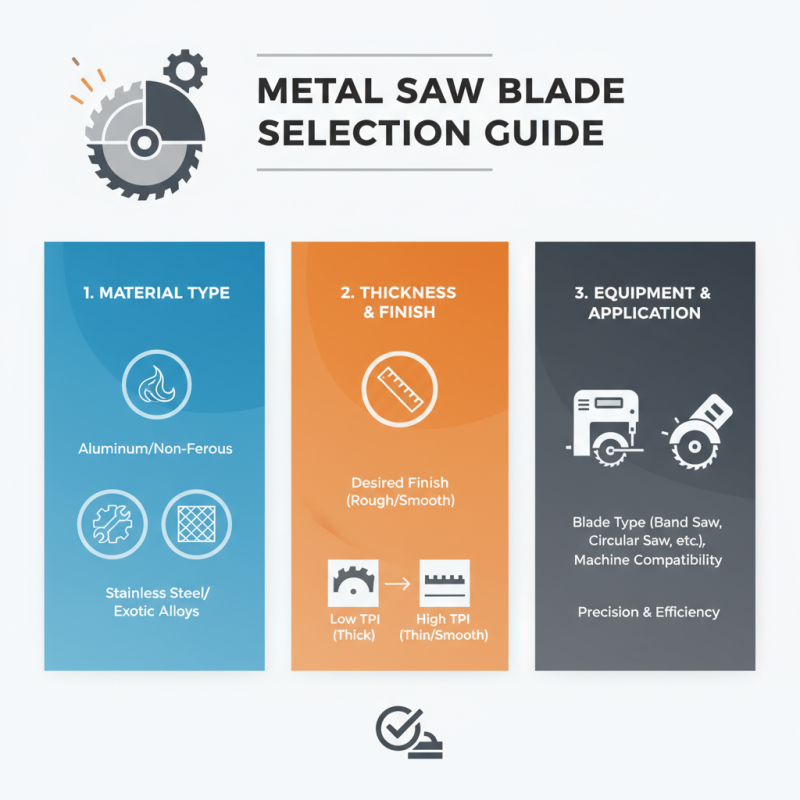
Metal saw blades come in various types, each designed for different tasks. Factors such as material type, thickness, and desired finish play a significant role. A common mistake is overlooking these variables. For instance, using an inappropriate blade can lead to poor cuts. Issues like overheating or dulling can arise quickly if the wrong blade is selected.
When selecting a metal saw blade, consider the application carefully. Ask yourself what material you will be cutting. Understand the specifications of your equipment as well. This attention to detail can ultimately save time and resources. Remember, the right metal saw blade is key to achieving successful results in your metalworking endeavors.
Understanding Different Types of Metal Saw Blades
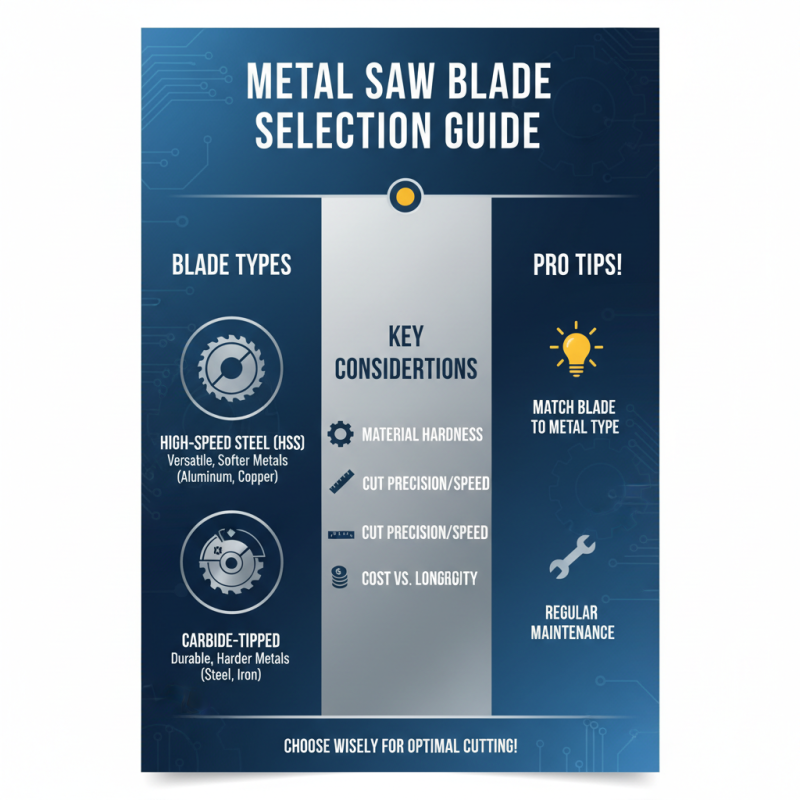
Choosing the right metal saw blade requires understanding the types available. Different metals demand specific blade designs. High-speed steel blades are popular for their versatility. They work well on soft metals like aluminum and copper. Carbide-tipped blades last longer and cut through harder materials. However, they can be pricey.
Consider the teeth per inch (TPI) on the blade. Higher TPI offers smoother cuts, ideal for sheet metal. Lower TPI is better for faster, rough cuts in thicker materials. Blade width also plays a role. A wider blade can handle more demands but may limit intricate cuts.
Pay attention to the material you are cutting. Stainless steel requires different blades compared to mild steel. Always assess your projects. It’s easy to choose a blade based solely on price. Yet, this could lead to frustration later. What works for one project may not suit another. Adapting to the right blade can make a significant difference. Think about how you can refine your choices for better results.
Key Factors to Consider When Selecting a Metal Saw Blade
When selecting a metal saw blade, several key factors demand attention. The material of the blade plays a crucial role. High-speed steel (HSS) blades are known for their durability. Studies show that HSS blades can withstand temperatures up to 600°C. They maintain hardness longer than standard blades. However, carbide-tipped blades are ideal for cutting tough metals like stainless steel. They offer both longevity and precision. Understanding the material helps in achieving clean cuts.
To add to this, tooth configuration affects cutting performance. Blades with fewer teeth cut faster but may produce rough edges. Blades with more teeth provide smoother finishes but cut slower. A 2022 industry report noted that blades with an optimized tooth count show up to 30% improved efficiency in metal cutting tasks. Yet, it's common to overlook this factor, leading to suboptimal results. Blade thickness also matters. Thicker blades tend to resist bending and provide stability, but they can cause more strain on machines.
Pay attention to the intended use of the saw blade. Different applications require different features. For instance, cutting thin sheets needs a different approach than thick metal beams. Many users fail to consider their specific needs, which leads to unnecessary costs and inefficiencies. Evaluate your specific requirements carefully. This reflection can steer you toward the best choice for your projects.
Evaluating Blade Material for Optimal Performance
Choosing the right metal saw blade starts with understanding blade material. Different materials affect performance significantly. High-speed steel, for instance, is durable and offers good cutting precision. However, it can be prone to wear in high-stress cutting situations.
Carbide-tipped blades are another option. They provide greater longevity and can handle tougher materials. But they come with a higher initial cost. Sometimes users overlook the importance of heat resistance. Blades that can withstand heat better last longer.
Not all blades are created equal. Users often find themselves stuck with the wrong choice. Evaluating your specific needs is crucial. Consider factors like material type and thickness. Each application demands a tailored approach. Experimenting with different materials may lead to unexpected results. It’s a learning process, and mistakes can lead to better decisions in the future.
Blade Teeth Profile: Choosing the Right Configuration
Choosing the right teeth profile for a metal saw blade is crucial. The teeth configuration affects how efficiently the blade cuts through metal. Various profiles exist, including flat-top, hook, and skip. Each design serves a specific purpose. Flat-top teeth are excellent for fast, rough cuts, while hook teeth offer smoother results.
When selecting a blade, consider the type of metal you’ll be cutting. For instance, softer metals like aluminum may require fewer teeth for quicker cuts. Conversely, hard materials like stainless steel need finer teeth for precision. The tooth count also influences the blade's speed and finish, adding another layer of complexity to your choice.
It's easy to overlook how teeth profile impacts performance. A mismatched blade can lead to poor cuts and damage. Remember, not all teeth profiles are created equal. Assess your specific cutting requirements and materials carefully. Testing different configurations can be beneficial. Overall, take the time to consider your options; the right choice can improve your cutting efficiency significantly.
Maintenance Tips for Prolonging Metal Saw Blade Lifespan
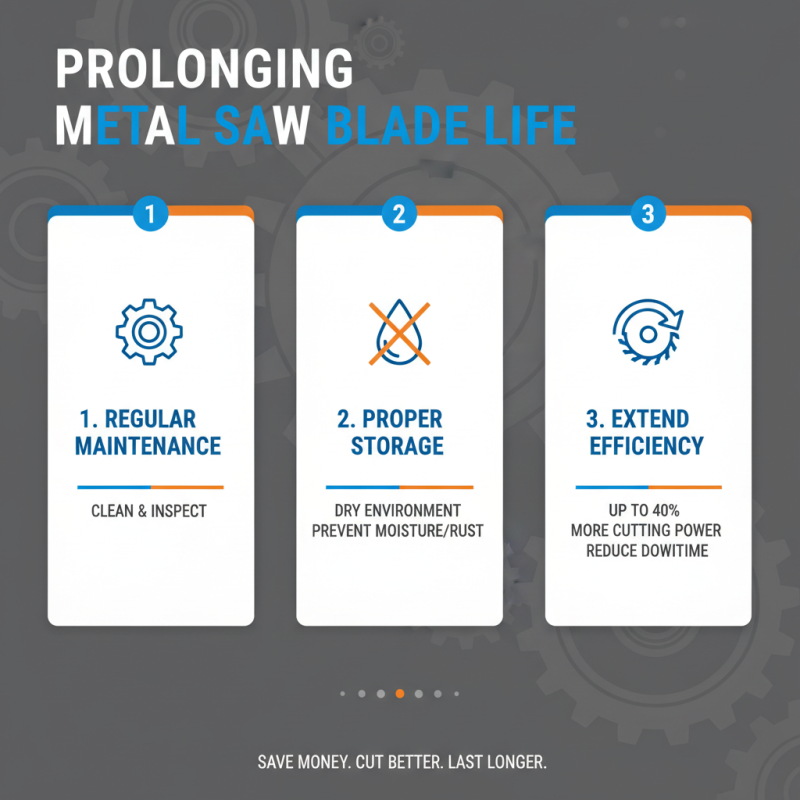
To prolong the lifespan of your metal saw blades, regular maintenance is crucial. Proper storage is essential. Blades should be kept in a dry environment, away from moisture. This helps prevent rust and corrosion, common issues that significantly shorten blade life. According to industry reports, blades can lose up to 40% of their cutting efficiency due to rust.
Sharpening your blades regularly can also extend their lifetime. It is recommended to sharpen blades after approximately every 100 cuts. Professionals note that ignoring this maintenance can result in a 50% decrease in cutting precision. Use the appropriate sharpening tools. Improper techniques can damage the blade and reduce its functionality.
Always clean your blades after use. Removing debris and residue helps maintain cutting performance. Use a gentle cleaning agent to avoid harsh chemicals that can cause damage. Interestingly, research indicates that well-maintained blades can last up to eight times longer than neglected ones. Monitoring blade vibrations during use is also wise. Excessive vibrations often signal that a blade needs to be addressed, either sharpened or replaced.