Essential Tips for Choosing a Ceramic Mixer Machine?
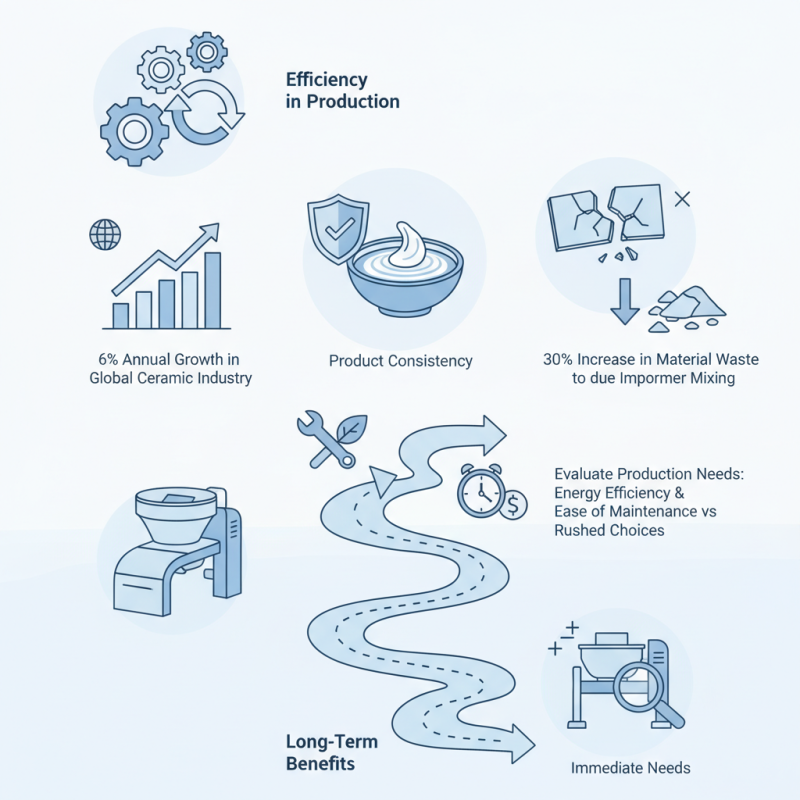
Choosing the right ceramic mixer machine is crucial for efficiency in production. The global ceramic industry is projected to grow at a rate of 6% annually, according to industry reports. This growth highlights the need for high-quality mixing equipment.
Ceramic mixer machines play a vital role in ensuring product consistency. Inadequate mixing can lead to defects, resulting in significant losses. A report from the American Society of Ceramics states that improper mixing can cause up to a 30% increase in material waste. Evaluating your production needs is essential before making a decision.
Selecting the right machine requires careful consideration. Look for features like energy efficiency and ease of maintenance. Moreover, demanding production schedules can lead to rushed choices. Make sure to reflect on the long-term benefits rather than just immediate needs.
Understanding the Basics of Ceramic Mixer Machines
When choosing a ceramic mixer machine, understanding its basics is crucial. These machines blend raw materials like clay, glazes, and additives. They ensure uniform consistency, which is vital for producing quality ceramics.
A ceramic mixer typically features various components, like a mixing chamber and paddles. The size of the machine can vary significantly. Smaller mixers are suitable for hobbyists, while larger ones cater to commercial needs. Pay attention to the design. Some machines are more ergonomic than others, making them easier to use.
Consider the mixing capacity. If you produce in large batches, choose a machine that can handle the volume. Reflect on the power source too. Electric mixers are common, but hand-operated ones exist. Sometimes they require more effort. Don't overlook maintenance needs, as certain designs might be tricky to clean. This can lead to issues if not addressed regularly.
Key Features to Consider When Choosing a Ceramic Mixer
Selecting the right ceramic mixer machine requires careful consideration of several key features. One crucial aspect is the capacity of the mixer. Many options range from 5 liters to over 100 liters. A versatile mixer can cater to smaller batches or larger production needs. Depending on your operations, finding the right size is essential.
Another important feature is the mixing technology. Some machines utilize paddle mixers, while others may offer planetary mixers. Each type has its advantages. According to industry reports, paddle mixers are efficient for denser materials, while planetary mixers provide better homogeneity for lighter mixtures. Understanding the specific needs of your ceramic mixtures can help you make an informed choice.
When evaluating options, consider ease of cleaning. Mixers with removable parts or smooth surfaces simplify maintenance. Regular cleaning can enhance the machine’s longevity. Always check for energy efficiency ratings as well. Low consumption can lead to significant cost savings over time. Remember, every detail counts in achieving the best performance in ceramic production.
Essential Tips for Choosing a Ceramic Mixer Machine
Types of Ceramic Mixer Machines and Their Applications
When selecting a ceramic mixer machine, understanding the types and their specific applications is crucial. There are primarily three types of ceramic mixers: paddle mixers, planetary mixers, and continuous mixers. Each has distinct features that suit various production needs. For instance, paddle mixers excel in processing dry materials due to their efficient mixing action. Industry reports indicate that paddle mixers can increase the mixing efficiency by up to 30%.
Planetary mixers, on the other hand, are ideal for producing homogeneous mixtures of ceramics and pastes. They work by moving the mixing tool in a circular motion while rotating around the bowl. This dual action is effective for achieving uniformity in mixtures, which is essential for quality control. According to recent data, these machines can significantly reduce the mixing time by about 25%.
Continuous mixers are designed for high-volume production. Their design allows for steady input and output, making them suitable for large-scale operations. Some industry experts point out that while these mixers boost productivity, they may require more frequent maintenance due to wear and tear. Each type has its strengths and weaknesses, and the right choice depends on specific production goals. Careful analysis of these factors is essential.
Evaluating Manufacturer Reputation and Support Services
When selecting a ceramic mixer machine, evaluating the manufacturer's reputation is crucial. Look for companies that have been in the industry for years. Longevity often indicates reliability. Read reviews and testimonials from previous customers. This firsthand information can reveal the true quality of the product and the support provided.
Support services are just as important. A manufacturer that offers solid customer service can make a significant difference. Ask about warranty options and service availability. If issues arise, knowing help is accessible brings peace of mind. Don’t ignore this aspect. Finding parts and receiving prompt support can save you from long downtimes.
It’s important to reflect on past experiences with manufacturers. Were there delays or unresponsive contacts? Such questions can guide your choice. A well-regarded manufacturer will not only sell you a machine but also ensure you feel supported afterward. Pay attention to their communication style. Clear and timely responses can indicate how they handle future issues. Remember, a good machine might stop working, but great support makes all the difference.
Budgeting for Your Ceramic Mixer Machine Purchase
When budgeting for your ceramic mixer machine, start by determining your needs. Consider how frequently you will use the machine. A basic model might suffice for occasional projects. Frequent users may require a higher-end model. This thought process can save you money in the long run.
Next, explore different price ranges. Some machines are affordable but lack durability. Others are costly and may offer features you don’t need. Research is essential. Read reviews and seek feedback from users. Make a list of must-have features and nice-to-haves. This can help narrow down your options effectively.
Don’t forget the hidden costs. Maintenance and repairs can add up over time. Consider warranty options or service packages that might be included in the purchase. A seemingly economical choice may result in more expenses later. Be realistic about what you can afford while ensuring the machine meets your project's demands. Balancing quality and budget requires careful consideration.
Essential Tips for Choosing a Ceramic Mixer Machine
| Feature | Importance | Budget Range (USD) | Recommended Power (HP) |
| Mixing Speed | High | 1000 - 2000 | 1 - 2 |
| Tank Capacity | Medium | 800 - 1500 | 1 - 3 |
| Material Quality | High | 1200 - 2500 | 2 - 3 |
| Durability | High | 1000 - 1800 | 1.5 - 2.5 |
| Energy Efficiency | Medium | 900 - 1600 | 1 - 2 |