What is a Tandem Cold Rolling Mill and How Does It Work?
In the world of metal processing, the tandem cold rolling mill plays a crucial role. This advanced machinery is essential for producing thin sheets of steel and aluminum. Experts recognize its importance for modern manufacturing. Dr. Emily Reynolds, a leading figure in metallurgical engineering, once stated, “The tandem cold rolling mill revolutionizes material production with precision and efficiency.”
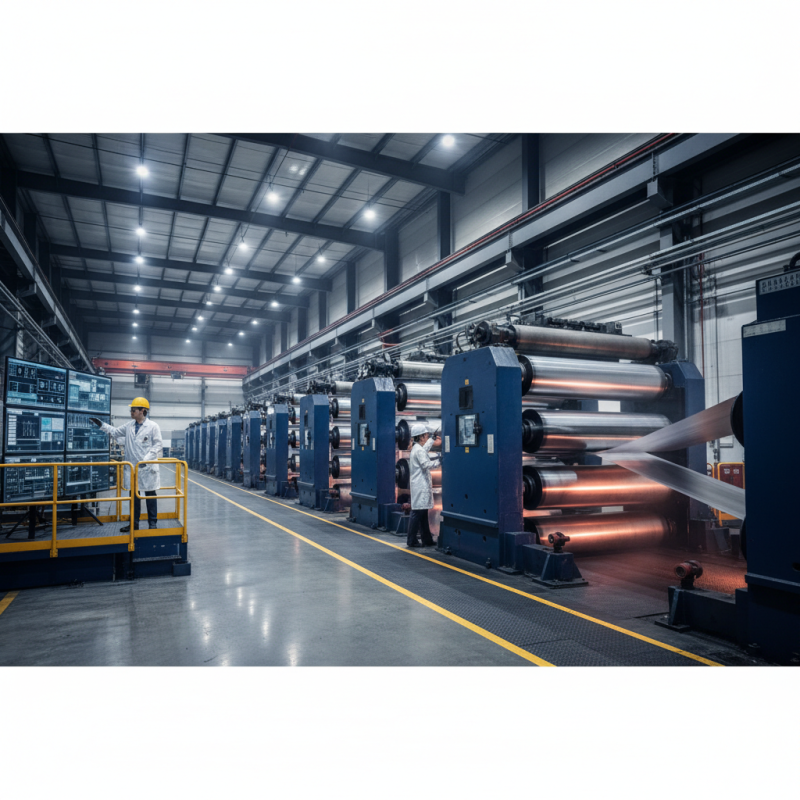
These mills consist of multiple rolls positioned in series. The metal strip passes through each roll, undergoing significant deformation and thinning. Such technology contributes greatly to the production speed and quality of finished products. However, this process is not without challenges. Ensuring uniform thickness and surface quality requires constant monitoring and adjustments.
The efficiency of a tandem cold rolling mill poses various questions. Are we fully utilizing its capabilities? What can be improved in its operation? Faster production cycles might lead to defects if not managed properly. Continuous innovation is necessary to address these concerns and maximize the potential of these machines.
What is a Tandem Cold Rolling Mill?
A tandem cold rolling mill is a key industrial tool for processing metal strips. It consists of multiple rolling stands, where metal strips pass through several stages of deformation. The primary aim is to reduce the thickness and enhance the mechanical properties of the metal. According to industry reports, cold rolling can improve yield strength and tensile strength significantly, often exceeding 20%.
In operation, the cold rolling process offers certain benefits. It allows for precise thickness control and high-quality surface finishes. However, some challenges arise in maintaining consistent quality over long production runs. Irregularities can appear, leading to waste and increased costs. It's also essential to monitor the temperature meticulously, as excessive heat can affect the material's properties adversely.
Interestingly, several studies highlight that the global cold rolling market is expected to grow steadily. The demand for lightweight materials in sectors like automotive and aerospace sparks innovation. Yet, the complexity of the machinery and the expertise required can be hurdles for some manufacturers. Adapting to these industrial demands often requires significant investment and a reevaluation of existing production techniques.
Key Components of a Tandem Cold Rolling Mill
A tandem cold rolling mill is a key component in metal processing. This machine works by reducing the thickness of metal strips in a series of rolling stands. Each stand has rollers that press metal to achieve the desired thickness and surface finish. The continuous operation allows for efficient production.
Key components include rolling stands, hydraulic systems, and control systems. Rolling stands are where the metal strip undergoes deformation. They consist of two or more rollers, which are crucial for achieving uniform thickness. Hydraulic systems provide the necessary force to press the metal. Control systems ensure the process runs smoothly and adjusts parameters in real-time.
Tips for operating a tandem cold rolling mill include regular maintenance checks for wear and tear. Monitor the hydraulic systems closely; leaks can disrupt production. Be aware of the temperature; overheating can affect the metal quality. Always review the settings for each batch. Adjustments may be required to achieve desired results. Reflect on past processes to identify areas for improvement. Fine-tuning contributes to efficiency and quality.
The Mechanism of Cold Rolling Process Explained
The cold rolling process is vital in metalworking. It enhances material properties such as strength and surface finish. Generally, this occurs at temperatures below 0.3 times the melting point of the metal. Most cold rolling mills are designed for efficiency. However, operational challenges do exist, affecting productivity.
The tandem cold rolling mill consists of several mill stands arranged in sequence. Each stand reduces the thickness of the metal in a single pass. Reports indicate that this configuration can improve output by 30%, compared to traditional methods. Nevertheless, maintaining consistent quality requires precise control. Variability in material properties can lead to defects, which challenges efficiency.
Maintaining surface quality is another key consideration. Cold rolled products are generally smoother than hot rolled items. A smooth surface can lead to better adhesion during further processing. Yet, achieving this demands careful monitoring. Data suggests that over 15% of cold rolled steel may contain imperfections. Continuous improvement in the process must address these flaws.
Advantages of Using Tandem Cold Rolling Mills
Tandem cold rolling mills have transformed the metalworking industry. These mills are known for their efficiency and productivity. They allow the continuous rolling of metal sheets or strips. In a tandem setup, multiple rolls operate in sequence. This minimizes material handling between processes, reducing downtime and enhancing throughput.
The advantages of using tandem cold rolling mills are significant. Reports indicate that they improve yield by up to 30%. This is crucial for manufacturers aiming to reduce waste. Moreover, the uniformity in product thickness is enhanced. Data shows that the precision of thickness can reach within ±0.01 mm. Such accuracy is vital for various applications, from automotive to aerospace.
Energy consumption is another area where these mills excel. They typically use less energy than traditional rolling mills. Some studies indicate a reduction of up to 15% in energy costs. However, operational challenges exist. Maintenance can be complex due to the machinery's advanced technology. Regular monitoring is needed to ensure peak performance. Overall, while tandem mills present clear advantages, they require careful management and ongoing assessment.
What is a Tandem Cold Rolling Mill and How Does It Work? - Advantages of Using Tandem Cold Rolling Mills
| Feature | Description |
| Process Type | Continuous rolling process where multiple rolling stands are arranged in tandem. |
| Material Compatibility | Suitable for various metals including steel, aluminum, and copper. |
| Thickness Reduction | Can achieve significant reduction in thickness in a single pass. |
| Production Efficiency | Higher productivity due to continuous processing and reduced downtime. |
| Surface Quality | Produces superior surface finishes with minimal defects. |
| Energy Efficiency | Lower energy consumption compared to traditional rolling mills. |
| Automation | Advanced automation systems enhance control and precision. |
| Applications | Used in automotive, construction, and manufacturing industries. |
Applications and Industries Utilizing Tandem Cold Rolling Mills
Tandem cold rolling mills are vital in several industries. They are widely used in the production of flat-rolled steel. This is essential for automotive manufacturing. In fact, the automotive sector is projected to consume around 38% of cold-rolled steel by 2025. The effects of efficiencies gained in production can be seen throughout the supply chain.
Construction and building materials also heavily rely on tandem cold rolling technology. In 2022, the demand for cold-rolled products in construction was estimated at nearly 30 million tons. This demand continues to rise as infrastructure projects increase. Additionally, the aerospace industry utilizes these mills to create lightweight components, thus improving fuel efficiency.
Although the technology is advanced, there are challenges. Maintaining precision during high-speed rolling is complex. Another issue is the need for regular maintenance, which can disrupt production schedules. Overall, understanding these applications helps industries improve material performance while addressing the necessary technological hurdles.