Why Invest in a Potato Chips Machine for Your Business?
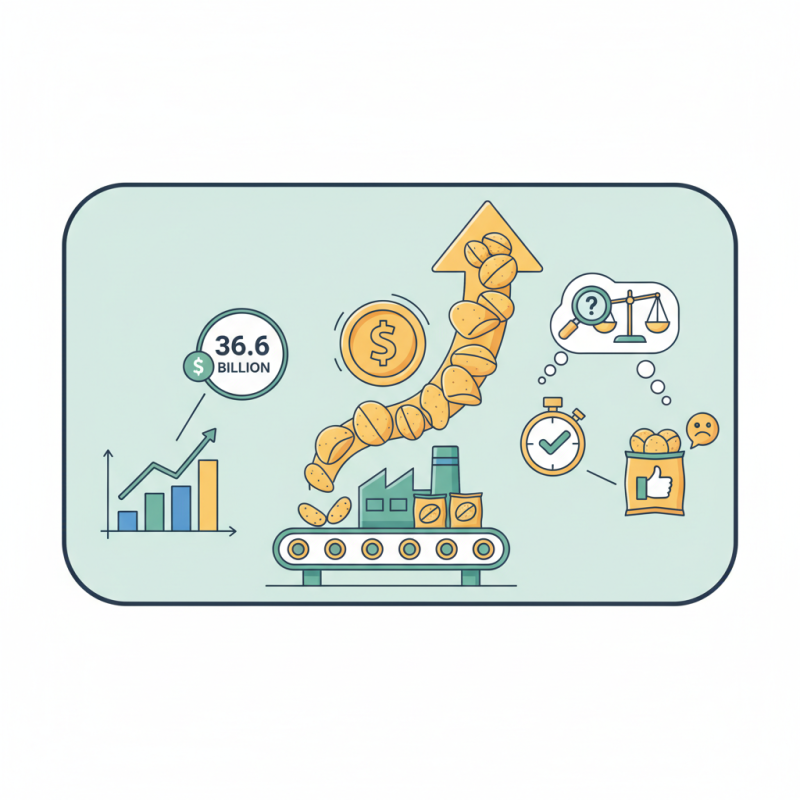
The snack food industry is booming, with the potato chips market projected to reach $36.6 billion by 2027. Investing in a potato chips machine can streamline production and enhance efficiency. In a competitive market, quality and speed matter. A reliable machine improves consistency and reduces labor costs.
However, obtaining the right potato chips machine requires careful consideration. Different models offer varying features for processing, packaging, and flavors. Finding a machine that fits your business needs can be challenging. It's essential to research and reflect on long-term goals, as equipment choices impact production capacity and quality.
Moreover, initial investment costs can be significant, but they are often outweighed by potential profits. Many small businesses struggle with this decision. Balancing budget constraints and desired output is crucial. In the rapidly growing snack market, making an informed decision on a potato chips machine can define business success.
Benefits of Investing in a Potato Chips Machine for Business Growth
Investing in a potato chips machine can significantly boost your business growth. The global snack food market is projected to reach $600 billion by 2025, with potato chips being a major segment. More and more consumers are gravitating towards snack foods, driving the demand for innovative products. A potato chips machine allows businesses to create unique flavors and textures, catering to changing consumer preferences.
With such equipment, businesses can cut down on production costs. A report shows that companies can reduce labor costs by up to 30% when automating snack production. Additionally, the machine ensures consistency in quality and taste, making it easier to meet consumer expectations. However, investing in this technology requires careful consideration. It’s essential to understand the market trends and customer preferences to create appealing products.
The initial investment may seem high, but the long-term benefits are substantial. Companies can explore various distribution channels and expand their reach. Poorly planned investments, however, can lead to excess production or wasted resources. Businesses need to analyze their operations closely. Understanding the return on investment is crucial. Balancing creativity and efficiency can lead to a successful snack food venture.
Market Trends and Demand for Potato Chips Industry in the Past Decade
The potato chips industry has seen remarkable growth over the past decade. Consumer preferences have shifted towards snacking, driving demand for various chip flavors and textures. Sales figures indicate a steady increase, suggesting a strong market for potential investors. This trend is not just based on statistics; you can feel it in every grocery store aisle overflowing with chip options.
Many consumers are now leaning towards healthier choices. This opens doors for businesses to innovate. There is space for baked, organic, and even vegetable-based chips. However, competition is fierce. Not every business succeeds in this evolving market. Finding unique selling propositions is crucial. If you consider entering this industry, think creatively but realistically.
Investment in a potato chips machine can be transformative. It allows for in-house production and control over quality. But not all machines are equal. Research and planning are necessary to avoid costly mistakes. The right equipment could pave the way for consistent, high-quality products. Yet, allocating funds wisely can feel overwhelming. Striking the right balance is essential to fully capitalize on this growing market.
Why Invest in a Potato Chips Machine for Your Business? - Market Trends and Demand for Potato Chips Industry in the Past Decade
| Year | Global Market Size (USD Billion) | Annual Growth Rate (%) | Major Regions |
| 2013 | 12.5 | 3.5 | North America, Europe |
| 2014 | 13.0 | 4.0 | North America, Europe |
| 2015 | 13.8 | 5.0 | North America, Asia-Pacific |
| 2016 | 14.6 | 5.8 | North America, Asia-Pacific |
| 2017 | 15.5 | 6.1 | Asia-Pacific, Europe |
| 2018 | 16.5 | 7.0 | Asia-Pacific, Europe |
| 2019 | 17.5 | 7.5 | Global |
| 2020 | 18.5 | 8.0 | Global |
| 2021 | 19.7 | 8.5 | Global |
| 2022 | 20.9 | 9.0 | Global |
| 2023 | 22.2 | 9.5 | Global |
Cost Analysis: Comparing Manual Production vs. Machine-Operated Production
Investing in a potato chips machine can revolutionize your production process. Manual production typically involves labor-intensive steps like slicing, frying, and packaging. It requires a dedicated workforce, increasing labor costs significantly. Studies show that labor costs can account for about 30% of total production expenses in manual setups.
On the other hand, machine-operated production is often more efficient. Automating the slicing and frying processes can reduce production time by up to 50%. This efficiency leads to a more consistent product and cuts down on labor requirements. Reports indicate that businesses that switch to machine-operated production can save up to 40% in operational costs over time.
Tip: Always analyze your production needs before making a purchase. Consider the scale of your business. A small startup may not need a large machine.
Another important aspect is the maintenance of machinery. Machines require regular upkeep. Neglecting maintenance can lead to breakdowns, which disrupt production. This factor may not be immediately obvious yet can have long-term financial implications.
Tip: Create a maintenance schedule and stick to it. This helps prevent unexpected costs and downtime.
Cost Analysis: Manual Production vs. Machine-Operated Production of Potato Chips
This chart illustrates the cost comparison between manual production and machine-operated production of potato chips. It highlights the potential cost savings when investing in a potato chips machine, making it an attractive option for businesses looking to improve efficiency and reduce costs.
Technological Advancements in Potato Chips Machinery and Their Impact
Investing in a potato chips machine can transform a food business. Technological advancements in machinery have played a crucial role. Modern machines improve efficiency significantly. They reduce cooking time, ensuring crispy chips in less time. However, challenges remain. The initial investment can be high. Small businesses might struggle to afford top-tier equipment.
Innovations also focus on user-friendliness. Machines come with intuitive interfaces. Operators can easily adjust settings for different chip styles. Yet, training is essential. Employees need to become familiar with new technology. If not, mistakes can happen during production. This may lead to waste and inefficiency.
Moreover, automation can sometimes overlook quality control. Chips may not always meet desired standards if machines run on autopilot. Regular maintenance is necessary to ensure optimal performance. Ignoring this can result in production setbacks. Embracing technology requires a balance between innovation and human oversight.
Return on Investment (ROI) Breakdown for Potato Chips Machine Purchases
Investing in a potato chips machine can be a game-changer. The return on investment (ROI) can be impressive. Initial costs may seem high. However, consider the long-term benefits. For instance, a single machine can produce hundreds of bags in a day. This output translates directly to revenue.
The ROI is influenced by various factors. The first is production costs. Buying raw potatoes in bulk can reduce expenses. Operational efficiency is also crucial. A well-maintained machine requires less downtime. Fewer repairs lead to higher profits.
Tips to enhance ROI are valuable. Focus on marketing your chips effectively. Unique flavors can attract more customers. Additionally, ensuring quality consistency boosts customer loyalty. Regularly assess your pricing strategy. Adjust based on market trends. This flexibility can significantly affect your overall profits.