How to Choose Agricultural Bearings for Your Equipment?
Choosing an Agricultural Bearing is not a catalog exercise. It is a decision about load, speed, exposure, and maintenance. A bearing that suits a clean workshop may struggle beside a dusty field, where straw, grit, and water reach seals and lubricant. Small details matter. Check the shaft size, housing fit, operating speed, and expected radial or axial loads before comparing part numbers.
The right choice also depends on the machine’s daily work. A combine harvester faces vibration and crop debris; a planter may sit idle between planting seasons, then work through dusty soil. Consider sealing, relubrication access, corrosion resistance, and how quickly a worn bearing can be replaced. A slightly higher purchase price may be worthwhile if it reduces downtime—but only when the conditions justify it.
A useful rule for this guide is: “Match the bearing to the real load and field conditions, not just the shaft diameter.” I can’t verify a named expert’s exact words from the material provided, so I won’t attribute that line to a person. Reliable selection starts with the equipment manual, measured operating conditions, and technical guidance from the bearing manufacturer. It also requires honest limits: no bearing choice can compensate for poor alignment, damaged seals, or neglected lubrication. This outline will help you compare the key factors and ask better questions before ordering.
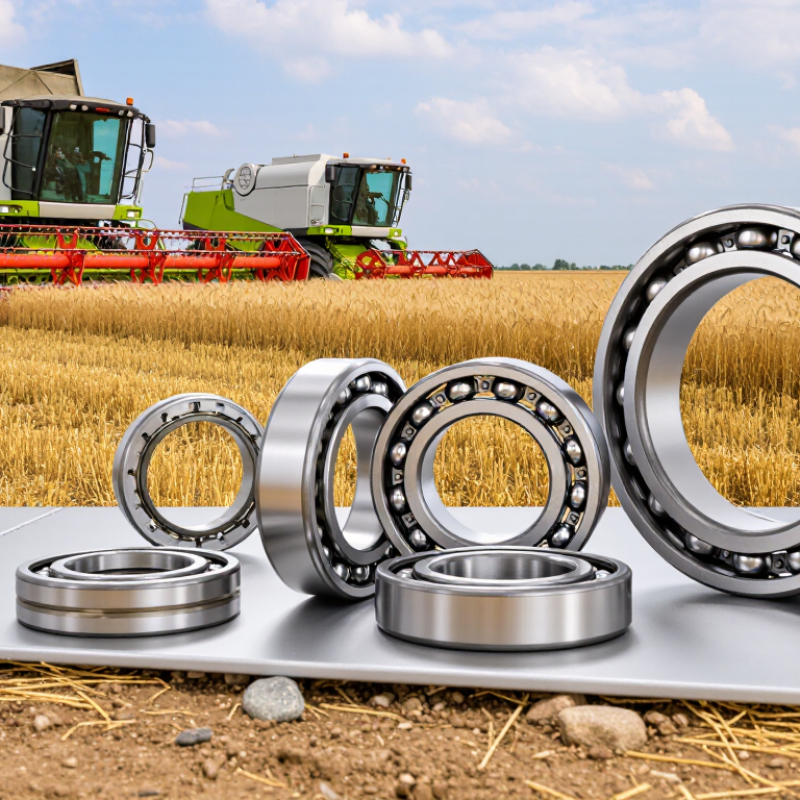
Identify the Equipment’s Operating Requirements
Selecting an agricultural bearing starts with the machine’s real operating cycle, not its catalog description. Record shaft speed, radial and axial loads, peak impacts, daily operating hours, and temperature. A seed drill may face steady rotation and airborne dust; a mower can encounter sudden shock loads from uneven ground. Note washdown, mud, and lubricant access too. Small details matter.
ASABE’s D497.7 Agricultural Machinery Management Data provides operation-specific machinery performance and power estimates. Use these as planning references, not as direct bearing-load measurements: actual loads depend on implement setup, soil, and operator habits. Then compare the measured duty cycle with the bearing manufacturer’s load and speed limits. ISO 281 calculates basic rating life at 90% reliability under defined conditions, but contamination or poor lubrication can shorten service life. A neat calculation can still miss a harsh field reality.
Tips: Measure during a representative workday, including startup and turns. Photograph seal damage and check grease condition after dusty shifts. Write down the worst temperature you observe, not just the average. If the data are uncertain, say so; verify the load before choosing a tighter bearing-life target.
How to Choose Agricultural Bearings for Your Equipment: Identify Operating Requirements
Compare typical operating demands before selecting a bearing. Ratings are qualitative guidance from 1 (lower) to 5 (very high); actual requirements vary with machine design and working conditions.
Compare Bearing Types Used in Agricultural Machinery
How to Choose Agricultural Bearings for Your Equipment?
Compare Bearing Types Used in Agricultural Machinery
Deep-groove ball bearings suit electric motors, fans, and lighter-duty shafts. They handle radial loads and moderate axial loads, but exposed seals can struggle with fine soil and washdown. Tapered roller bearings support combined loads, making them useful in wheel hubs and gearboxes. They need accurate adjustment; excessive preload can create heat. Spherical roller bearings tolerate heavy radial loads and some shaft misalignment, a practical advantage on vibrating implements. Needle roller bearings fit compact pivots where space is tight, though they need a hardened, well-finished running surface. No type wins everywhere. A dusty seed drill and a wet harvesting header ask different things of a bearing.
Compare load direction, speed, shock, available space, and sealing before choosing. ISO 281:2007 defines basic rating life using 90% reliability under specified operating conditions. That is a calculation benchmark, not a promise of field life. Contamination, poor lubrication, and misalignment can shorten service life sharply. A selection made from load ratings alone may look neat on paper, but it can miss the mud packed behind a seal.
Tips: Check the old bearing’s dimensions and failure pattern. Look for heat discoloration, pitting, or worn seals. Match the lubricant and relubrication interval to the machine’s actual conditions. Recheck shaft fit and housing alignment; these details are easy to overlook.
Match Bearing Dimensions, Seals, and Lubrication
Match the bearing bore to the shaft, then verify outside diameter and width against the housing. Fit comes first. Check the shaft shoulder and retaining hardware as well; a worn shaft can make an old bearing’s dimensions misleading. Compare the required radial and axial loads with the equipment manual, not just the bearing’s appearance. A bearing that slips on a dusty axle may feel acceptable by hand, then loosen under field vibration.
Seal choice depends on what reaches the bearing. Contact seals generally block dirt and moisture more effectively, while non-contact shields can reduce drag but offer less exclusion. FAO’s AQUASTAT database estimates that agriculture accounts for about 70% of global freshwater withdrawals. That figure is not a bearing-failure rate, but it underscores why irrigation, mud, and washdown exposure deserve attention. A clean-looking seal is not proof of a clean interior.
Use grease suited to the bearing, operating temperature, and speed, and check compatibility before mixing products. Too little lubrication invites wear; too much can raise heat, especially in a tightly sealed unit. Follow the maker’s service interval when available, then adjust only with evidence from inspection and operating conditions. I would recheck after the first long, dusty shift. Small details matter.
Verify Compatibility, Installation, and Maintenance Needs
An agricultural bearing must match the equipment’s load, speed, shaft size, and operating conditions. Check the machine manual, then measure the shaft and housing rather than relying on an old part alone. Small details matter. Dust, moisture, crop residue, and washdown can shorten service life, so choose seals suited to the actual exposure. A bearing that fits on paper may still be unsuitable in a muddy, high-vibration field.
Before installation, clean the housing and shaft, and check for burrs, scoring, or wear. Keep it clean. Use the correct fitting tool and apply force only to the ring being fitted; striking the rolling elements can cause hidden damage. Confirm alignment and any specified clearance or locking method. A tight fit is not automatically a correct fit, and forcing one can damage the shaft.
Follow the equipment and bearing instructions for lubrication. Sealed units may not be designed for relubrication, while serviceable types need the specified grease and amount. Overgreasing can raise operating temperature. Set inspection intervals around workload and field conditions, not just the calendar. Watch for unusual heat, noise, looseness, or grease leakage. Record what you find; honestly, maintenance notes are easy to neglect until a problem appears.