What Is a Feather Meal Processing Machine?
A Feather Meal Processing Machine converts cleaned poultry feathers into a dry, protein-rich material used in animal feed and other approved applications. The term can describe one machine or a coordinated processing line. Depending on its design, the line may include a cooker, press, dryer, grinder, and screening equipment. Each stage affects the final product. Small changes in moisture, temperature, or particle size can alter the meal’s consistency.
The process typically starts with feather preparation, followed by heat treatment and mechanical separation. Drying reduces residual moisture, while grinding creates a more uniform meal. The equipment must handle a fibrous, springy raw material that can bridge or collect in hoppers. That detail matters. Operators should consider cleaning access, ventilation, material flow, and temperature monitoring alongside advertised capacity. A high output figure alone does not show how reliably a machine will perform with a particular supply of feathers.
This guide explains what a Feather Meal Processing Machine does, how its main components work, and which practical details deserve attention before purchase. It also outlines common operating considerations, such as energy use, maintenance, and quality checks. Specifications can be difficult to compare because manufacturers may measure capacity under different conditions. Not every line behaves alike. Actual results depend on raw material, process settings, and operator experience, so buyers should verify claims with application-specific data. Even a well-designed system needs careful adjustment; that point is easy to underestimate.
Definition and Purpose of a Feather Meal Processing Machine
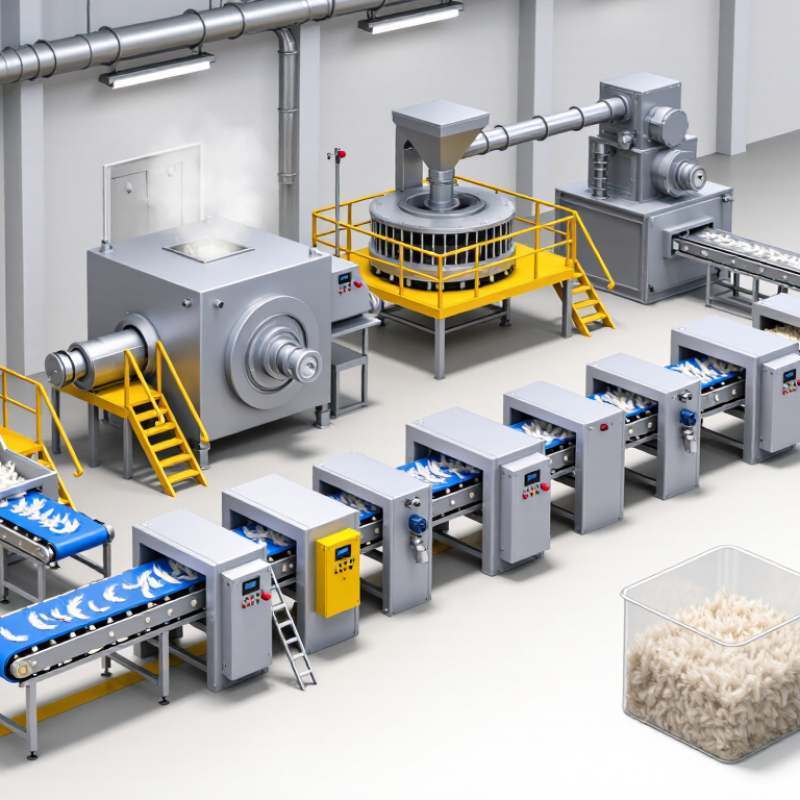
A feather meal processing machine is a system that turns poultry feathers into a dried, ground protein ingredient. It commonly includes a hydrolyzer or cooker, a dryer, and a mill. Feathers are cleaned of visible debris, then treated with heat and pressure. This helps break down keratin, the tough protein in feathers, and makes the material easier to process.
After treatment, the wet material is dried to a stable moisture level and milled into a consistent meal. The machine’s purpose is to make this conversion controlled and repeatable, not simply to grind feathers. Operators need to monitor temperature, pressure, and drying time. Poor control can leave uneven material. It is easy to assume one setting fits every batch, but feather condition and moisture can vary.
Tips: Check the finished meal for moisture, particle size, and signs of incomplete processing. Keep equipment clean, and record process settings between batches. Small checks matter. A processing line should be selected to match its expected capacity and the quality targets of the intended use.
Feather Preparation and Feeding
Feather preparation begins before the cooker starts. Fresh feathers arrive wet, tangled, and mixed with small amounts of blood or litter. Operators remove visible contaminants and check for foreign objects that could damage conveyors or block the feed throat. The material is then drained and conveyed steadily. Keep it moving. A compacted mass can feed unevenly, leaving some feathers underprocessed while others receive excess heat.
Moisture and particle size affect feeding consistency. Large clumps bridge above a hopper; overly aggressive cutting can create a wet, dense mash. A practical setup uses a screen or cutter suited to the incoming material, followed by a controlled, even feed into the processing vessel. Feedipedia, compiled by INRAE, CIRAD, AFZ, and FAO, reports feather meal averaging about 86% crude protein on a dry-matter basis, with substantial variation among samples. That variation makes routine sampling more useful than relying on one specification sheet.
Feathers are mostly tough keratin, not an easily digested protein. Onifade and colleagues’ 1998 review in Bioresource Technology discusses this resistance and the need for effective processing. Operators should therefore record feed rate, moisture, and cooker conditions together, then compare them with finished-meal tests. The awkward part is that “steady feeding” is not a fixed setting; it changes with each delivery. A simple log can reveal patterns, though it will not replace inspection.
Key Processing Stages: Hydrolysis, Drying, and Grinding
What Is a Feather Meal Processing Machine?
Key Processing Stages: Hydrolysis, Drying, and Grinding
A feather meal processing machine turns cleaned poultry feathers into a stable, usable protein ingredient. Its key stages are hydrolysis, drying, and grinding. During hydrolysis, heat, moisture, and pressure soften the feathers’ tough keratin structure. Operators monitor temperature, pressure, and holding time because uneven treatment can leave coarse, poorly processed material. Control matters. The right settings depend on the equipment and incoming feathers.
After hydrolysis, the material moves to a dryer. Removing moisture helps limit spoilage during storage, but excessive heat or drying can affect product quality. Workers can check moisture levels at several points rather than judging dryness by appearance alone. A damp patch near the center may be easy to miss. Recording batch conditions also helps teams identify process variation, though records cannot replace careful inspection.
The dried material enters a grinder, where screens help determine the final particle size. A finer meal may blend more evenly, while very fine grinding can increase dust and energy use. Operators should check for blockages, worn parts, and inconsistent output. Small changes in feather condition or machine loading can affect the result, so one fixed setting may not work well for every batch.
Main Components and How the Machine Operates
A feather meal processing machine converts cleaned feathers into a dry, protein-rich ingredient through heat treatment, moisture removal, and size reduction. Its main components usually include a feed hopper, a sealed hydrolysis cooker, a steam supply, a discharge system, a dryer, and a grinder. The exact layout varies with capacity and the condition of the incoming material.
The hopper guides feathers into the cooker. Inside, heat and pressure soften their structure; controlled mixing helps expose the material evenly. A pressure gauge and temperature sensors let operators monitor the cycle. That matters. Once cooking is complete, the treated feathers move to a dryer, where warm air reduces moisture. The dried material then passes through a mill and screen, which help produce a more consistent meal.
Keep it steady. Uneven feeding or drying can leave damp clumps and inconsistent particle sizes. Operators should check seals, sensors, and moving parts before each run, and follow the equipment’s operating instructions. Even with good controls, incoming feathers can vary in moisture and texture, so settings may need adjustment. That part takes judgment.
What Is a Feather Meal Processing Machine? Main Components and How It Operates
A feather meal line typically hydrolyzes feathers, dries the treated material, then grinds and screens it.
The bars show the operating sequence only—not processing time, capacity, or equipment size. Actual line layouts vary.
Feather Meal Outputs and Common Uses
What Is a Feather Meal Processing Machine?
Feather meal outputs are dried, ground protein ingredients made by cooking and hydrolyzing poultry feathers. A processing machine controls heat, pressure, drying, and particle size. These steps matter: insufficient hydrolysis can leave keratin poorly digestible, while excessive heat can damage amino acids. The finished meal is usually a fine, tan-brown powder with a distinct cooked smell. Small batches vary.
Feedipedia, a feed database compiled by INRAE, CIRAD, AFZ, and FAO, reports feather meal crude protein commonly around 80–90% of dry matter. That figure can mislead. Protein content alone does not show how much an animal can digest, and amino acid availability depends on processing. Feed formulators therefore use it as one ingredient in balanced rations, rather than treating it as a complete protein source. It may supply protein in poultry, swine, aquaculture, and pet-food diets, subject to product quality and formulation needs.
Outside feed, feather meal is also used as a slow-release nitrogen source in some fertilizers. Its nutrients break down as soil microbes act on the material, so the timing can differ from soluble fertilizers. For buyers, useful checks include moisture, protein analysis, particle uniformity, and documented processing controls. A clean-looking powder is not proof of consistent digestibility.
| What Is a Feather Meal Processing Machine? - Feather Meal Outputs and Common Uses |
| Processing Stage | Typical Equipment | Main Output | Purpose or Common Use |
| Receiving and pre-cleaning | Receiving hopper, conveyor, and screening equipment | Sorted feathers with large foreign materials removed | Prepares poultry-processing feathers for controlled heat treatment. |
| Hydrolysis | Pressure hydrolyzer or batch cooker | Heat- and pressure-treated feather material | Breaks down the tough keratin structure and improves the material’s suitability as a digestible protein ingredient. |
| Drying | Rotary, disc, or other industrial dryer | Dried hydrolyzed feather material | Reduces moisture so the material can be milled and stored more reliably. |
| Grinding and screening | Hammer mill or grinder with a screen | Ground feather meal with a more consistent particle size | Produces a meal that can be handled and blended into formulated feeds. |
| Finished product | Meal cooler, storage bin, and bagging or bulk-loading system | Hydrolyzed feather meal | Used as a protein ingredient in formulated animal feeds, including some poultry, aquaculture, and pet-food diets where permitted. It is generally used as part of a balanced formula, not as a complete feed on its own. |
| Quality and handling | Sampling and laboratory testing equipment | Tested meal with documented nutrient and safety characteristics | Moisture, protein, digestibility, and microbiological quality can vary with raw material and processing conditions. Feed use must follow applicable local regulations and formulation requirements. |