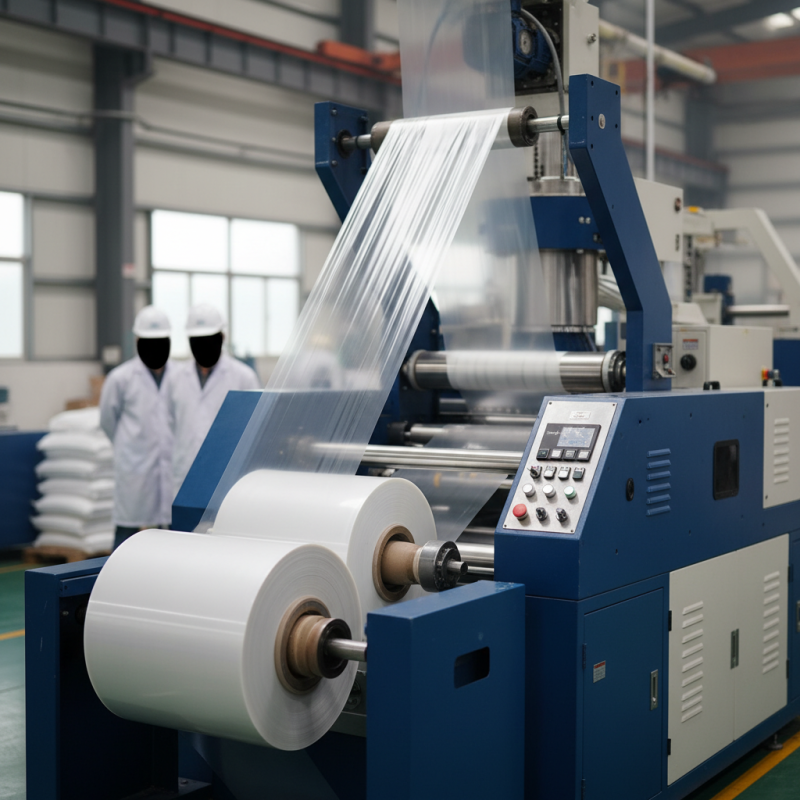
How to Choose the Right ABA Blown Film Machine for Your Needs?
Choosing the right aba blown film machine is crucial for your production needs. Many factors affect this decision, and it can be daunting. The type of material, thickness, and production speed are vital considerations.
When selecting an aba blown film machine, think about the capacity required. Consider the volume of film you need to produce daily. Smaller operations might struggle with a machine designed for high output. Production efficiency may suffer if the wrong choice is made.
Look into specific features as well. Some machines offer advanced controls, while others are more manual. It’s essential to balance cost with functionality. Reflect on your operations; sometimes, a less complex machine fits better than a high-end model. Quality is not just about price; it’s about meeting your unique needs in film production.
Understanding ABA Blown Film Technology and Its Applications
ABA blown film technology is a popular choice in packaging manufacturing. This method uses three layers of material, combining advantages of different polymers. The A layers provide durability, while the B layer offers excellent barrier properties. This unique structure enhances the film's performance for various applications.
The applications of ABA blown film are broad. It is commonly used in food packaging, industrial wraps, and consumer goods. The resistance to moisture and oxygen makes it suitable for perishable items. However, the choice of materials can affect performance. Sometimes, the balance between cost and quality can be challenging.
When selecting a machine, consider the desired film thickness and width. The production speed is crucial too. Understanding specific needs will help inform the decision-making process. It’s important to reflect on the long-term goals. Making a hasty choice can lead to issues later. Aim for a machine that meets current demands while allowing for future growth.
ABA Blown Film Machine Output Comparison
Key Factors to Consider When Choosing an ABA Blown Film Machine
Choosing the right ABA blown film machine can seem daunting. Focus on key factors to make an informed decision. Speed and output capacity are critical. Many machines average 100 to 200 kg/hour. However, understanding your production needs is vital. A machine that can’t keep pace will cost time and money.
Material compatibility is another significant consideration. ABA machines often use various resins, like LDPE and LLDPE. According to industry reports, proper resin selection can enhance film quality by 30%. Investigate the types of films you plan to produce. Some machines excel in specific applications, like packaging or agricultural films, while others may struggle.
Maintenance and ease of operation are frequently overlooked. User-friendly design can reduce downtime. Regular preventive maintenance is necessary. However, many operators do not prioritize this, leading to potential breakdowns. Assess the support and training options available from the manufacturer before committing. A lack of support can turn into a frustrating experience.
Comparing Different ABA Blown Film Machines: Features and Specifications
Choosing the right ABA blown film machine requires careful consideration of various features and specifications. These machines often vary in size, output capacity, and technology. When comparing models, pay attention to the film thickness range. Some machines may only handle thin films, while others can produce thicker varieties. This can impact your production needs significantly.
Another key aspect to assess is the ease of operation. Some models feature complex controls, making them difficult for new operators. Meanwhile, others offer intuitive interfaces. This difference can affect training time and operational efficiency. Don't overlook the machine's cooling system; improved cooling can enhance film quality, but sometimes, it may not be adequate for all film types.
Also, think about maintenance requirements. Some machines are built for longevity but may need regular checks on certain parts. Consider the availability of those parts in your area. The design and materials of the machine could influence its durability as well. Reflect on how these factors align with your production goals and workflow. Make sure to keep your specific needs at the forefront of your decision-making process.
Assessing Production Capacity and Efficiency for Your Business Needs
Choosing the right ABA blown film machine hinges on understanding your production capacity and efficiency. Start by evaluating how much film you need to produce daily. Consider the size and types of products you plan to manufacture. Are they primarily for packaging, or are they specialized uses? This decision impacts how much film you must produce.
Next, think about machine efficiency. A machine that runs continuously with minimal downtime is crucial. However, high efficiency does not guarantee quality. Machines that produce a lot of film quickly may lack precision. Regularly assessing the balance between speed and quality is essential. You may end up with waste if your machine cannot maintain quality standards at higher speeds.
Reflect on the layout of your production space as well. A comfortable workflow can improve efficiency but can also complicate operations. Can the machine fit well in your existing layout? Asking these questions can reveal shortcomings in your current setup. Always be open to adjustments to meet production demands effectively.
Evaluating Cost-Effectiveness and Return on Investment in ABA Machines
When evaluating the cost-effectiveness of an ABA blown film machine, it’s crucial to look beyond the initial price tag. Consider factors like energy consumption and maintenance costs. An efficient machine may have a higher upfront cost but can lead to significant savings over time. Users often overlook these long-term benefits, focusing only on short-term expenses.
Return on investment (ROI) should be a key metric in your decision-making process. Calculate potential production output and the quality of films. Higher quality can justify a higher investment. Some machines might promise high speed but fall short on durability. Performance should match your production goals.
Additionally, it’s important to analyze your specific needs. A smaller operation might not require a top-tier machine. It’s easy to fall into the trap of choosing oversized equipment, leading to underutilization. Reflecting on these points can help determine the best machine for your production line. Balancing cost and performance is vital for a successful investment.