10 Best Cargo Tie Down Straps for Trucks?
Choosing the right Cargo Tie Down Straps is about more than finding a strong-looking ratchet. The right setup must suit the load, anchor points, and trip. A strap that works well for lumber may not be ideal for a motorcycle or a stack of boxes. Check the label for working load limit, inspect the webbing and stitching, and make sure the hooks fit the truck’s anchor points. Small details matter. A twisted strap or a frayed edge can change how securely a load sits.
The Federal Motor Carrier Safety Administration (FMCSA) states: “Each commercial motor vehicle must, when transporting cargo on public roads, be loaded and equipped, and the cargo secured, in accordance with this subpart.” That is a useful reminder that securement depends on the whole setup, not just one strap. This guide compares ten options by practical features, including strap width, length, hardware, ease of tensioning, and visible durability. It also considers where each product may fall short. A higher load rating alone does not make a strap the best choice.
Look closely. Then choose for your load. No roundup can replace checking the manufacturer’s instructions or inspecting gear before use. Some details are easy to overlook, especially when loading in a hurry. That is worth admitting. The best Cargo Tie Down Straps are the ones that match the job and remain in sound condition—not simply the ones with the boldest claims.
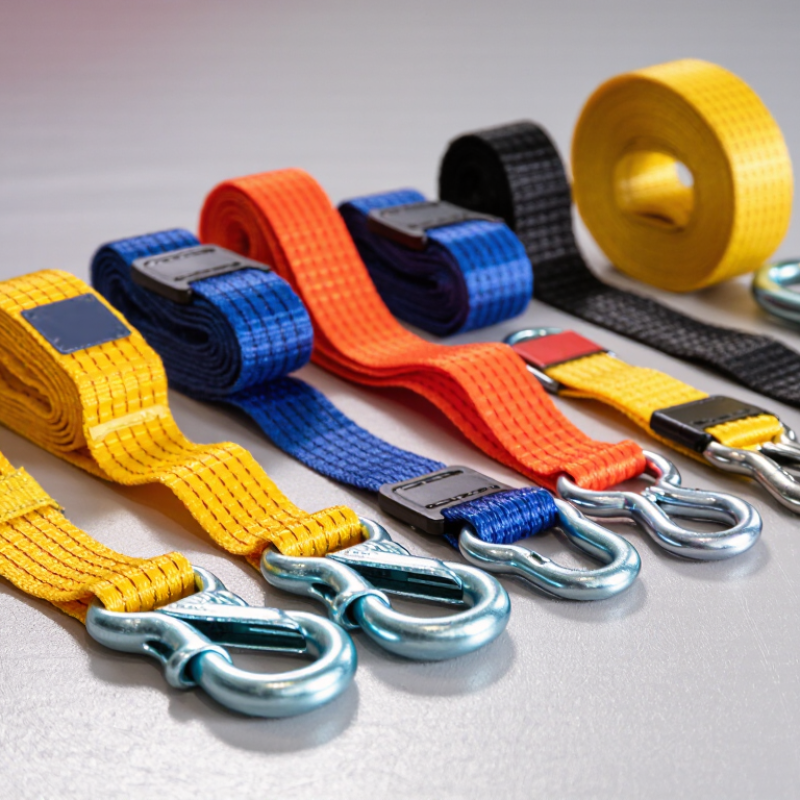
How Truck Tie-Down Straps Work: Webbing, Ratchets, Hooks, and Labels
10 Best Cargo Tie Down Straps for Trucks?
A cargo tie-down strap works as a system: webbing, a tensioning device, hooks, and a readable label. The webbing should lie flat against the load, without twists, cuts, melted spots, or frayed edges. Ratchets tighten the strap by winding webbing around a spindle. Pull the loose end through the slot, then pump the handle until the cargo feels secure. More force is not always better; excessive tension can crush cartons or damage delicate surfaces.
Hooks connect the strap to truck anchor points. Seat each hook fully, and check that it cannot slip free when tension is applied. A hook that looks attached may still be poorly seated. Labels provide essential details, including the strap’s working load limit and care instructions. Check the label before use, and compare the marked limit with the load and tie-down arrangement. Ratings can vary by strap and setup, so don’t assume two similar-looking straps are interchangeable. Small details matter.
Tips: Protect webbing from sharp edges with suitable corner guards. After tightening, recheck the load and strap tension. If a label is missing or damage is visible, set the strap aside; guessing is not a reliable inspection method.
FMCSA Rule: Aggregate Tie-Down WLL Must Be at Least 50% of Cargo Weight
For truck cargo, strap count matters less than combined working load limit (WLL). Under 49 CFR 393.106(d), aggregate tiedown WLL must equal at least 50% of the cargo’s weight. A 2,000-pound load therefore needs at least 1,000 pounds of aggregate WLL. FMCSA’s cargo-securement rules define WLL using the weakest component in the tiedown assembly, not its breaking strength. Check the label, hooks, and fittings. A high-rated strap attached to a weak anchor does not solve the problem.
For example, four tiedowns each rated at 300 pounds WLL provide 1,200 pounds combined, meeting that basic threshold for the example load. But that calculation alone does not prove securement is adequate. FMCSA’s rules also address forward, rearward, and lateral movement, and the required arrangement depends on the cargo. CVSA’s North American Standard Out-of-Service Criteria guide roadside inspections, making visible damage, loose hardware, and unreadable ratings practical concerns. Data sheets can look reassuring. Frayed webbing is less so. I still find it easy to overlook anchor points during a quick check, so inspect the full setup before departure.
Rank 10 Truck Straps by WLL, Length, Webbing, Hardware, and Standard
This ranking compares ten example truck-strap configurations, not independently tested products. WLL means working load limit, not breaking strength. Always judge the complete assembly, including its hardware and label.
Ranked by practical capacity, length, webbing, hardware, and documented standard:
Top pick is a 2-inch strap, 27 feet long, with a 3,333-pound WLL, polyester webbing, and forged ratchets.
Second is a 2-inch, 20-foot model with the same 3,333-pound WLL and sturdy flat hooks.
Third is a 2-inch, 16-foot strap rated at 3,333 pounds, useful when extra length would leave loose webbing.
Fourth is a 2-inch, 30-foot strap rated at 2,500 pounds, with a longer reach but less capacity.
Fifth is a 1.5-inch, 15-foot strap rated at 1,000 pounds, with compact ratchets.
Sixth is a 1-inch, 12-foot strap rated at 500 pounds, best reserved for light loads.
Seventh is a 2-inch, 27-foot strap rated at 3,333 pounds with wire hooks; check hook fit against the anchor points.
Eighth is a 1.5-inch, 20-foot strap rated at 1,000 pounds, offering reach without bulky hardware.
Ninth is a 1-inch, 15-foot strap rated at 500 pounds, handy for small cargo.
Tenth is a 2-inch, 16-foot strap whose label omits a verifiable WLL or standard. Avoid relying on it until documentation is available.
Look for clear assembly ratings and stated compliance with a recognized standard, such as WSTDA-T-1. Inspect stitching, cuts, rust, and ratchet action before use. Spec sheets help, but real anchor geometry can change what works. That part is easy to overlook.
Match Strap Capacity to Cargo Weight and Tie-Down Configuration
10 Best Cargo Tie Down Straps for Trucks?
Match Strap Capacity to Cargo Weight and Tie-Down Configuration
Choose straps by working load limit (WLL), not breaking strength. FMCSA’s cargo securement rule, 49 CFR §393.106(d), requires aggregate tiedown WLL of at least half the cargo’s weight. For a 1,000-pound load, that means at least 500 pounds of combined WLL. Treat this as a minimum benchmark, not an automatic strap selection. Check every label.
Configuration changes what a strap can do. A strap routed over a crate relies partly on friction; a direct tie-down resists movement through its angle and anchor points. Shallow angles can reduce effective restraint, while slick packaging may let cargo creep. Keep straps clear of sharp edges, and confirm that anchors are rated for the load too. Angles matter.
Count only the tiedowns actually working in the direction cargo might shift. A four-strap setup does not provide equal restraint in every direction if all four pull the same way. Tension each strap evenly, then check for slack after a short drive. It is easy to trust the printed number too much; cargo shape, contact surfaces, and anchor placement can upset a tidy calculation. Recheck the setup when the load settles.
Inspect Straps for Cuts, Damaged Stitching, and Missing WLL Labels
Before loading, inspect each strap along its full length. Look for cuts, frayed edges, melted patches, and pulled or broken stitching, especially near the hooks and ratchet. A strap can look sound in the middle while its stitching is separating at a stress point. Tiny flaws matter. Federal Motor Carrier Safety Administration cargo-securement rules require tiedowns to be in proper working order and marked with their working load limit (WLL). If the label is missing or unreadable, do not guess the strap’s capacity from its width or color.
The Commercial Vehicle Safety Alliance’s 2023 International Roadcheck report recorded 59,026 vehicle inspections, with 19.3% of vehicles placed out of service for vehicle-related violations. That figure covers many defects, not just tie-down straps, but it shows why a quick walk-around should not replace a careful check. I have found worn stitching easiest to miss when straps are still wrapped around the ratchet.
Tips: Unroll each strap and check both faces in good light. Confirm the WLL label is legible, then examine the stitching where webbing meets the hardware. Set aside straps with cuts or damaged seams until their condition and rating can be verified. A rushed check is better than none, but it is not enough.